 Universo Tarot MarzaraArt · symbol · experience
Collection · Series 09 of 15
Lenormand Duos Series
Universo Tarot Marzara expands its horizons and enters the language of Lenormand, the 36-card cartomancy system named after the celebrated French cartomancer Marie-Anne-Adélaïde Lenormand.
8 duos · 16 Lenormand decks · 36 cards per deck · 72 cards in each box.
Each of these decks is born from the meeting of two languages. The Lenormand system contributes its structure, traditional symbols, and interpretive essence; the original Universo Tarot Marzara decks contribute their visual and cultural identity: colors, characters, clothing, landscapes, architecture, ornamentation, and atmosphere.
This is not about reducing a 78-card Tarot or selecting only part of its imagery. Each deck is a complete recreation of the 36 Lenormand cards within a different universe. The Rider, the Bear, the Scythe, the Ring, the Key, and the other traditional emblems thus take on a new form without losing their essential meaning.
When a symbol does not belong to the culture or historical period represented, it is replaced by its cultural and symbolic equivalent. In some cases it keeps its traditional name; in others, it receives a new name suited to that world. The image may change, but its function within the Lenormand language remains intact.
The decks are presented in duos because each box brings together two complete interpretations, selected to complement, contrast with, or enter into dialogue with one another. Two different identities move through the same structure of 36 symbols and offer two ways of entering the Lenormand universe.
The eight boxes form a collection of sixteen reinterpretations spanning cultures, civilizations, empires, and legendary worlds. The journey culminates in a tribute to the classic Lenormand tradition: Classic 1900 and its later golden transformation under The Midas Touch.
Thus a series is born that unites tradition and creation: the essence of Lenormand remains, but each duo opens two different doors through which to discover it.
Universo Tarot Marzara
Boxes in the Series
Discover the identity of each deck and explore the different worlds within the collection.
Duo 1
The first duo brings together two worlds that are geographically and visually distant, yet connected by travel, determination, and movement toward a new destination. The impetuous force of the Viking universe meets the ceremonial and spiritual richness of the Hindu world, creating two profoundly different interpretations of the same Lenormand structure.
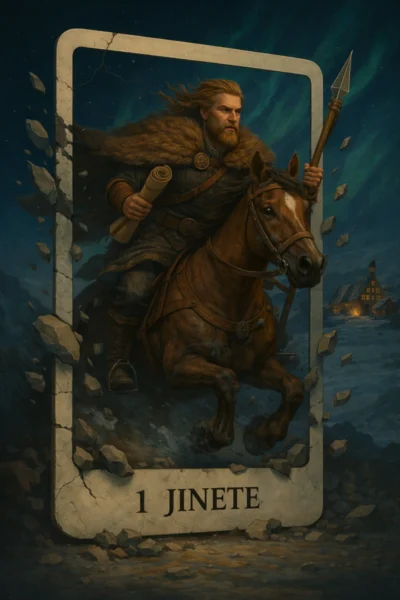
In the Viking 3D deck, the symbols appear among cold landscapes, rocks, auroras, and warrior-like figures. Its three-dimensional language intensifies the action: the figures break through the frames and seem to move forward from within the cards with strength, urgency, and determination.
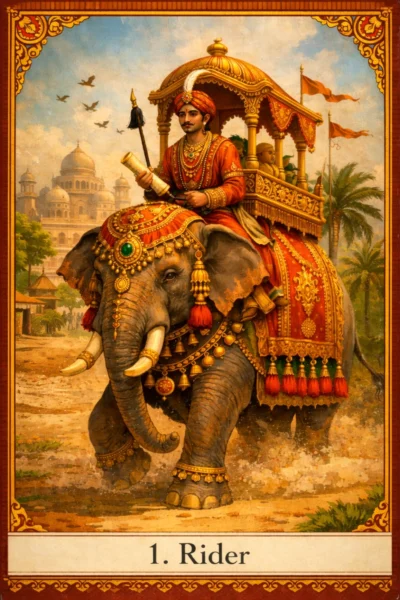
The Hindu deck offers a luminous, ornate, and majestic identity. Palaces, ceremonial garments, jewels, animals, and intense colors transform the Lenormand symbols into scenes filled with beauty, tradition, and spiritual depth.
The Rider card perfectly sums up the dialogue between the two decks. In the Viking world, the messenger rides among mountains and northern skies; in the Hindu world, he advances solemnly atop a decorated elephant. The means of transport changes to fit each culture, but the essence of the card remains: movement, arrival, news, and something new approaching.
Thus, the first box unites the drive of the North with the majesty of India: two different travelers, two visual universes, and the same message moving toward us.
Duo 2
Two ancient worlds meet in a duo shaped by passions, secrets, and human conflicts. The solemnity of the Roman universe and the earthly strength of Celtic culture offer two different visual languages for interpreting Lenormand symbols, turning each card into a scene capable of telling its own meaning.
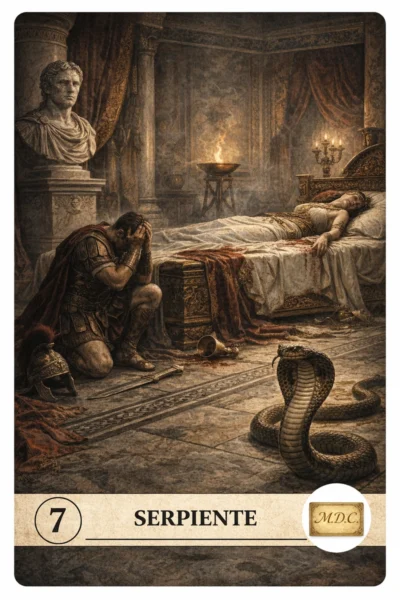
In the Roman deck, monumental architecture, clothing, and historical figures create a deeply dramatic intensity. The Snake card forms a symbolic scene—not a literal reconstruction—inspired by the tragedy of Mark Antony and Cleopatra. The deceptive news of Cleopatra’s supposed death drives Mark Antony into despair. The cobra, the sword, and the spilled cup bring deception, confusion, and their irreversible consequences together in a single image.
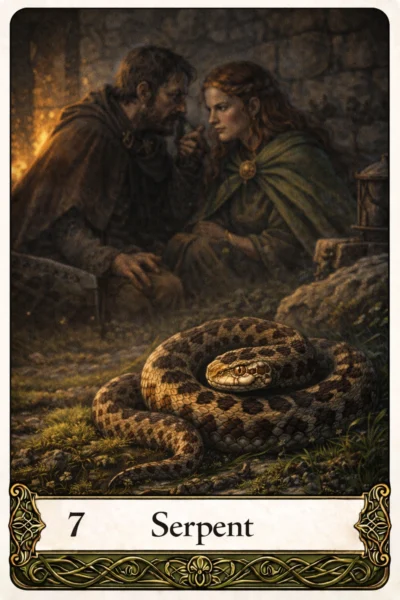
In the Celtic deck, the same symbol leaves the palaces behind and moves into a more intimate setting. A couple speaks in secret beside a stone structure while the snake remains in the foreground. Here, its presence speaks of distrust, hidden words, and conflicts beginning to slip silently into a relationship.
The same archetype thus moves from historical tragedy to everyday tension without losing its Lenormand essence. Rome represents deception capable of altering a destiny; the Celtic world represents what slowly enters between two people. Two different scenes expressing the same warning.
Duo 3
Two civilizations with deeply recognizable identities meet in this duo. The monumental force of ancient Egypt and the delicate harmony of the Japanese world offer two completely different ways of representing Lenormand symbols: one intense and three-dimensional; the other serene, elegant, and contemplative.
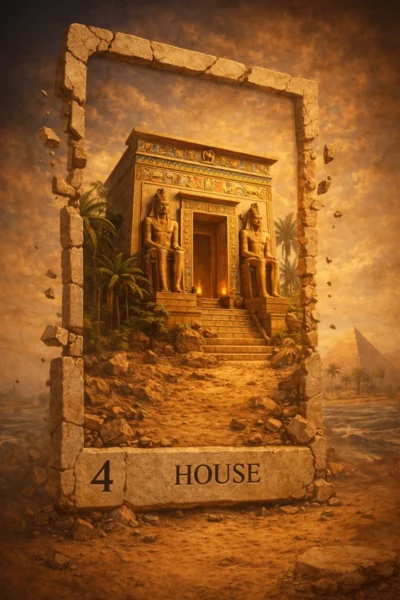
The Egyptian 3D deck builds its scenes among temples, reliefs, pharaonic figures, pyramids, and landscapes bathed in desert light. Its elements seem to break through the surface and emerge from fractured stone frames, creating depth and a powerful sense of presence. In The House, the home takes the form of a monumental structure linked to pharaonic power: a protected, solid space intended to endure through time.
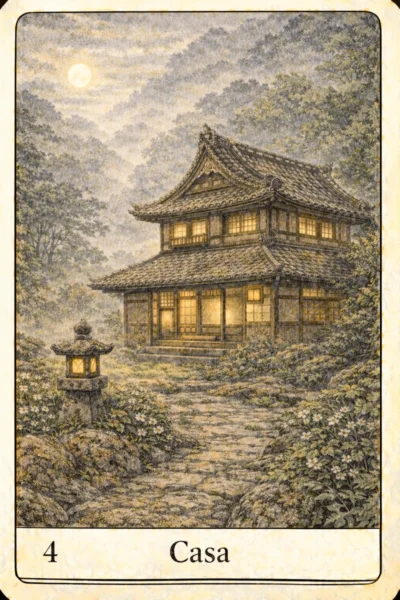
The Japanese deck expresses that same symbolic universe through a much more intimate visual language. Its wooden buildings, gardens, paths, lanterns, and natural landscapes convey balance, delicacy, and serenity. In its interpretation of The House, the home becomes a quiet refuge integrated with nature, where interior light suggests protection, belonging, and shared life.
Thus, the same symbol passes through two worlds without losing its essence. Egyptian 3D presents the home as a monumental sanctuary that defies the passage of centuries; Japanese presents it as a space of calm and harmony. Two architectures, two sensibilities, and the same human need: to find a place to belong.
Duo 4
Two vast territories, separated by history and geography, meet in this duo deeply connected to the land. The free spirit of the cowboy world and the ancestral richness of the Inca universe offer two different ways of narrating Lenormand symbols: one through human scenes of frontier life; the other through landscapes, textiles, colors, and elements linked to nature.
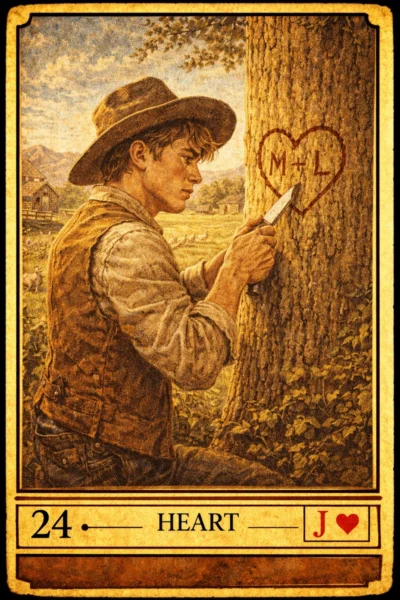
The Cowboy deck carries its symbols into ranches, towns, dusty roads, and vast western landscapes. Its warm, aged aesthetic turns each card into a small story. In The Heart, a young man carves initials into a tree: a simple, intimate gesture that speaks of love, promise, and the desire to leave a feeling written forever.
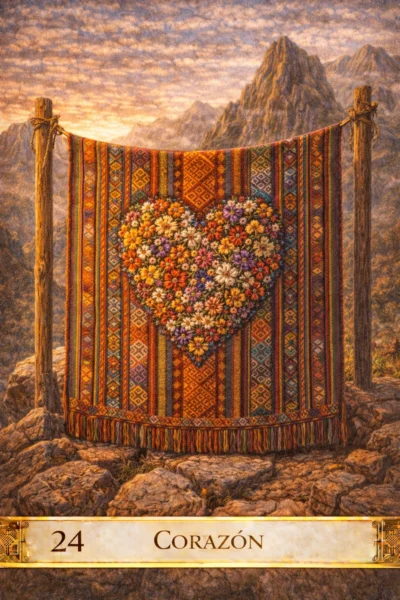
The Inca deck expresses those same meanings through a colorful visual identity deeply connected to the Andean world. Mountains, textiles, flowers, and traditional designs form a symbolic language filled with strength. In its interpretation of The Heart, flowers compose the central figure on a large textile, as if love were born from the earth, blossomed among its colors, and became intertwined with the roots of a culture.
Cowboy represents love that leaves a mark; Inca, love that is woven, blossoms, and unites. Two very different cultural expressions for an emotion that knows no borders.
Duo 5
Two worlds of profound spirituality meet in this duo. Sioux traditions and the ancient Maya worldview transform Lenormand symbols through ceremonies, natural elements, and sacred representations. The images change, but their oracular function remains intact.
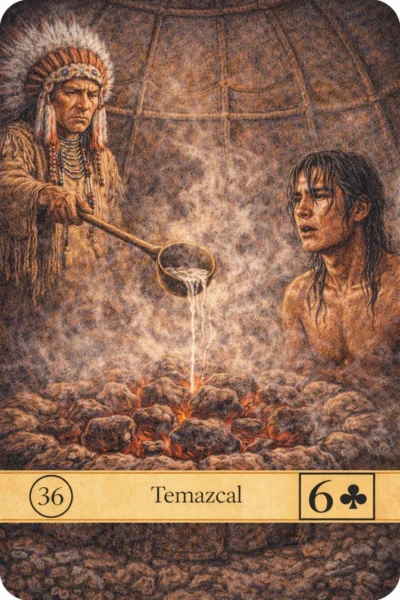
The Sioux deck carries Lenormand meanings into scenes connected with nature, community life, and the spirituality of the Great Plains. In card number 36, the traditional image of The Cross is transformed into the Temazcal or Inípi, a Lakota purification rite. The heat of the stones, water, steam, and ceremony turn the trial represented by this card into a conscious passage: enduring effort, releasing burdens, and recovering inner strength.
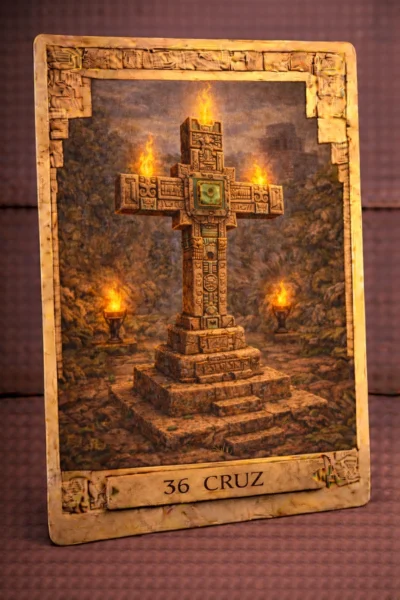
The Maya 3D deck builds its identity through monuments, reliefs, symbols, fire, and ancient forms that seem to emerge from the card itself. In its interpretation of The Cross, the stone figure evokes pre-Columbian cruciform symbolism and the connection between the earth, the upper world, and the spiritual world. Its monumental presence expresses the weight of destiny, responsibility, and those experiences that must be endured as part of a greater path.
Sioux turns the burden into a rite of purification; Maya 3D turns it into a symbol connecting different worlds. One invites us to enter the heat in order to be reborn; the other to recognize the deeper meaning of what we must carry. Two different images expressing the trial, faith, and strength contained in The Cross in Lenormand.
Duo 6
An ancient imperial civilization and a legendary submerged world meet in this duo. The ceremonial refinement of the Chinese universe and the luminous, visionary atmosphere of Atlantis offer two profoundly different interpretations of Lenormand symbols: one linked to tradition and memory; the other to mystery and the limits of the known.
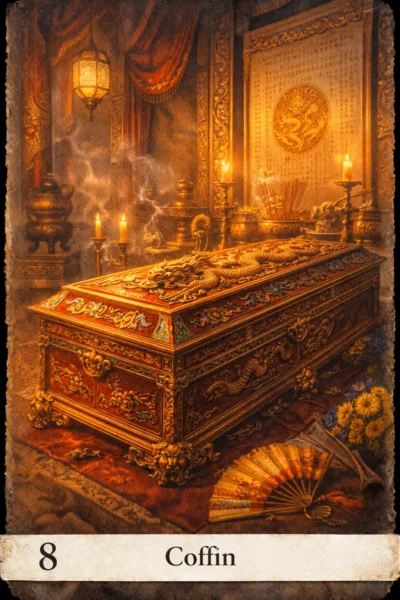
The Chinese deck moves its imagery into palaces, traditional clothing, dragons, calligraphy, and ceremonial objects, within a palette dominated by reds, golds, and warm light. In The Coffin, a finely ornamented sarcophagus rests among candles and incense. The ending is presented as a solemn act surrounded by respect, silence, and ancestral memory.
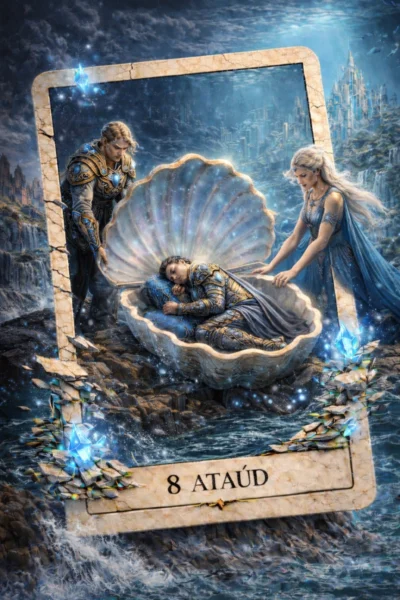
The Atlantean 3D deck opens the door to a mythical civilization built among oceans, crystals, luminous cities, and beings of almost ethereal appearance. Its scenes cross the edges of the card and move toward the viewer. In its interpretation of The Coffin, a large seashell becomes a resting place, while the water, light, and figures accompanying the scene suggest a transition into another state of existence.
Chinese represents an ending guarded by tradition; Atlantean 3D, a return toward an unknown universe. One says farewell amid gold, incense, and memory; the other entrusts its mystery to the ocean. Two ways of expressing closure, rest, and the profound transformation symbolized by The Coffin.
Duo 7
Two cultures deeply connected with the sea meet in this duo. The elegance of ancient Greek civilization and the natural vitality of the Polynesian universe transform the European symbols of Lenormand through imagery rooted in their own traditions, without losing their essential meaning.
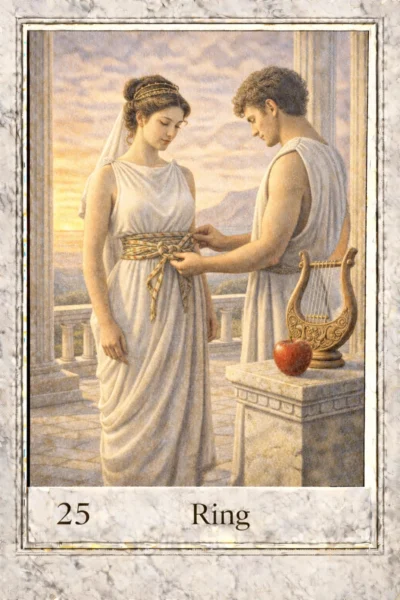
The Greek deck recreates its cards among columns, temples, classical clothing, Mediterranean landscapes, and ceremonial scenes. In The Ring, the modern jewel is replaced by the knot of a bridal belt, transformed into a symbol of union and commitment between two people. The apple and the lyre complete a scene in which the bond is not placed on a finger: it is tied through an act filled with intention.
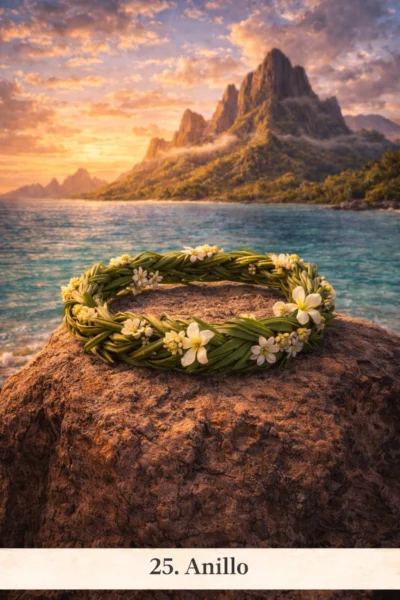
The Polynesian deck carries Lenormand symbols into islands, oceans, mountains, flowers, and elements made from natural materials. In its interpretation of The Ring, leaves and small flowers intertwine to form a circle on the stone, facing the vastness of the sea. Union is presented as something living: a bond born from nature, strengthened through interweaving, and continued in a circle with no beginning or end.
Greek represents commitment that is tied; Polynesian, the bond that intertwines and blooms. Two cultural equivalents expressing the union, agreements, promises, and cycles represented by The Ring in Lenormand.
Duo 8 — Classic 1900 + Classic 1900 Gold
This final duo holds a special place within the series. It does not bring together two cultures or two different universes: it presents the same tribute in two complementary expressions.
Classic 1900 is an artistic reinterpretation inspired by the traditional visual language of Lenormand. Its images recover the elegance, atmosphere, and sensibility of another era, preserving the recognizable symbols of its 36 cards within an identity of its own.
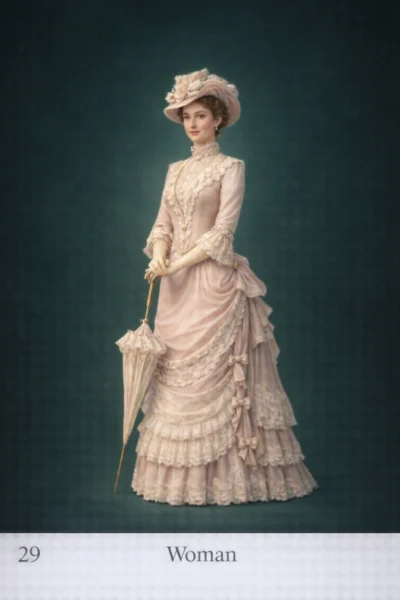
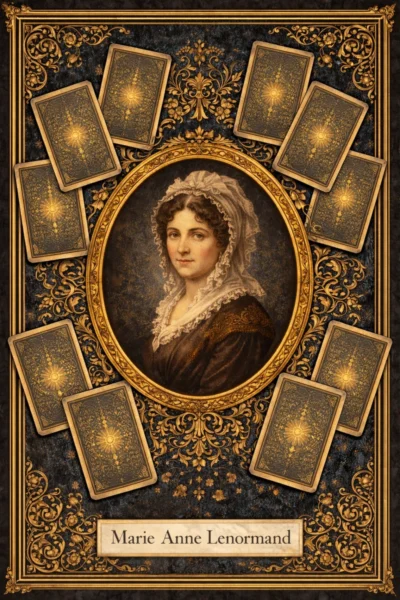
The Lady embodies that feminine, intuitive, and refined presence. Her figure is not intended as a literal portrait of Marie Anne Lenormand, but as a symbolic evocation of womanhood and of the cartomantic tradition linked to her name. The card back completes the tribute with her portrait surrounded by cards and ornaments that recall the mystery of a practice passed down through time.
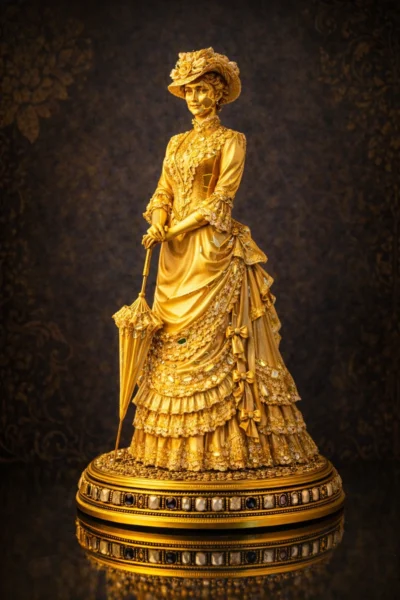
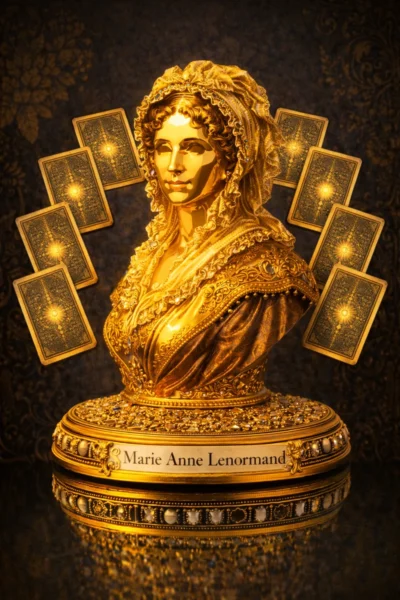
In Classic 1900 Gold, that same universe receives The Midas Touch. The Lady becomes a majestic golden figure, while the card back reimagines the portrait of Marie Anne Lenormand as a commemorative golden bust. The symbols remain, but they gain a sculptural, luminous, and ceremonial presence.
Together, the two decks unite tradition and metamorphosis: the memory of a classic language and its golden transfiguration. A finale conceived as a tribute to the figure who gave her name to one of the world’s most recognized cartomantic traditions.
Universo Tarot Marzara is a collection in development. Its decks will be released progressively and, when available, will be sold through Amazon. This page does not sell products directly.